- Home
- About Us
- Consular Services
- India-Sri Lanka Relations
- Media
- Country File
- Trade
- Education/ Scholarship
- Cultural SVCC
- Important links
Speeches & Statements
Remarks by H.E. Santosh Jha, High Commissioner of India to Sri Lanka at Symposium on )
July 24, 2026
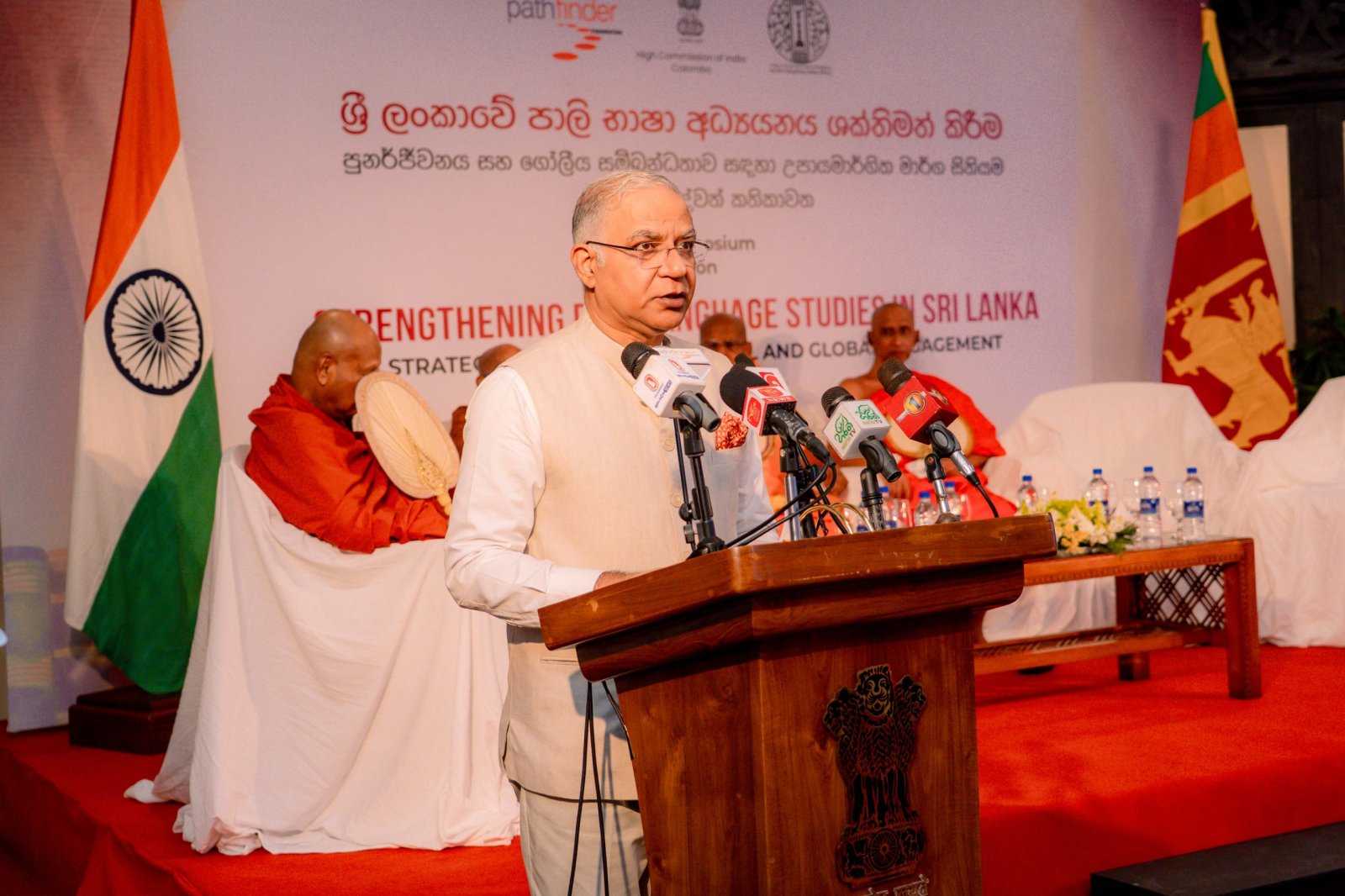
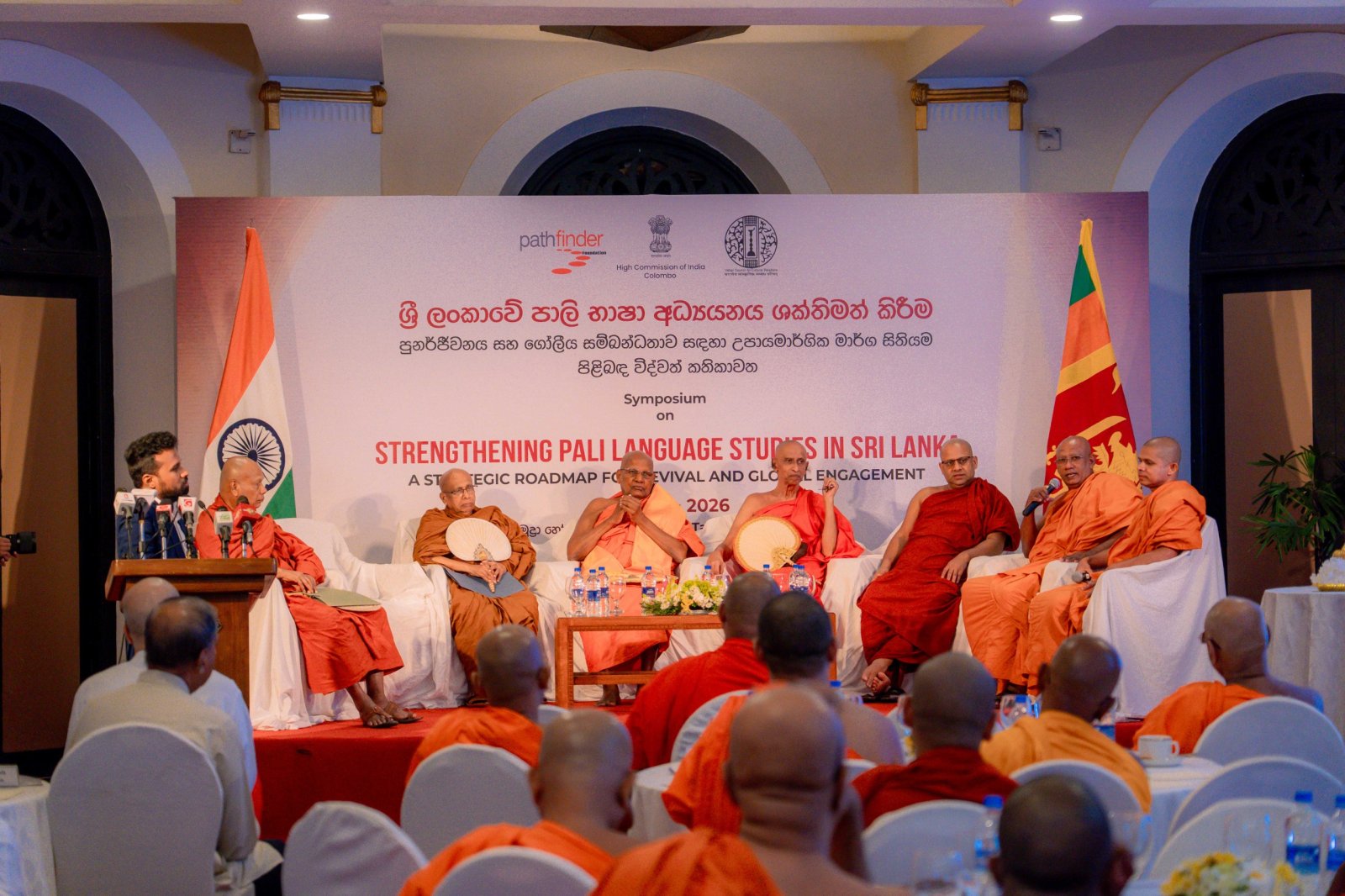
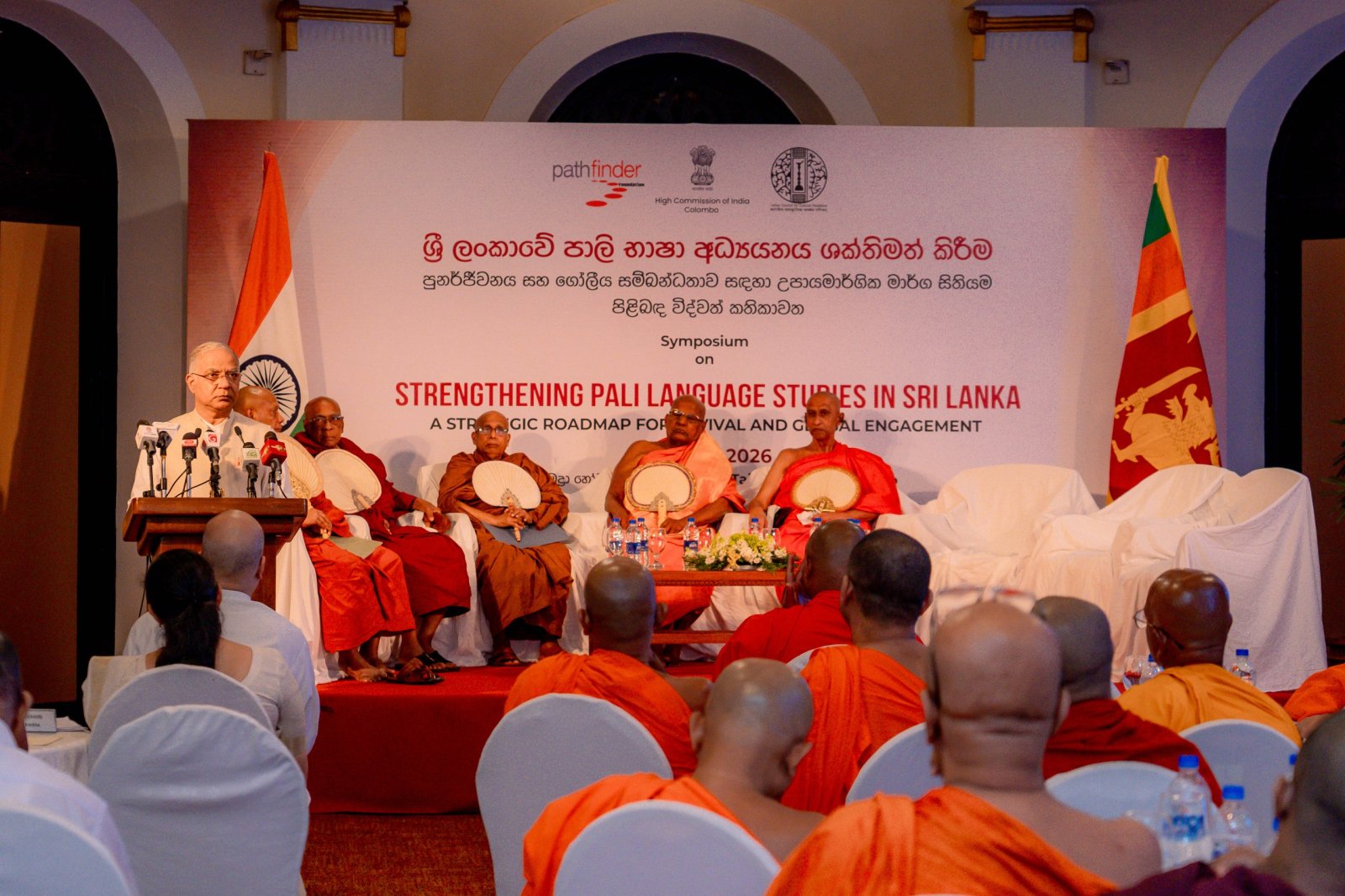
Remarks by High Commissioner of India to Sri Lanka H.E. Santosh Jha at the
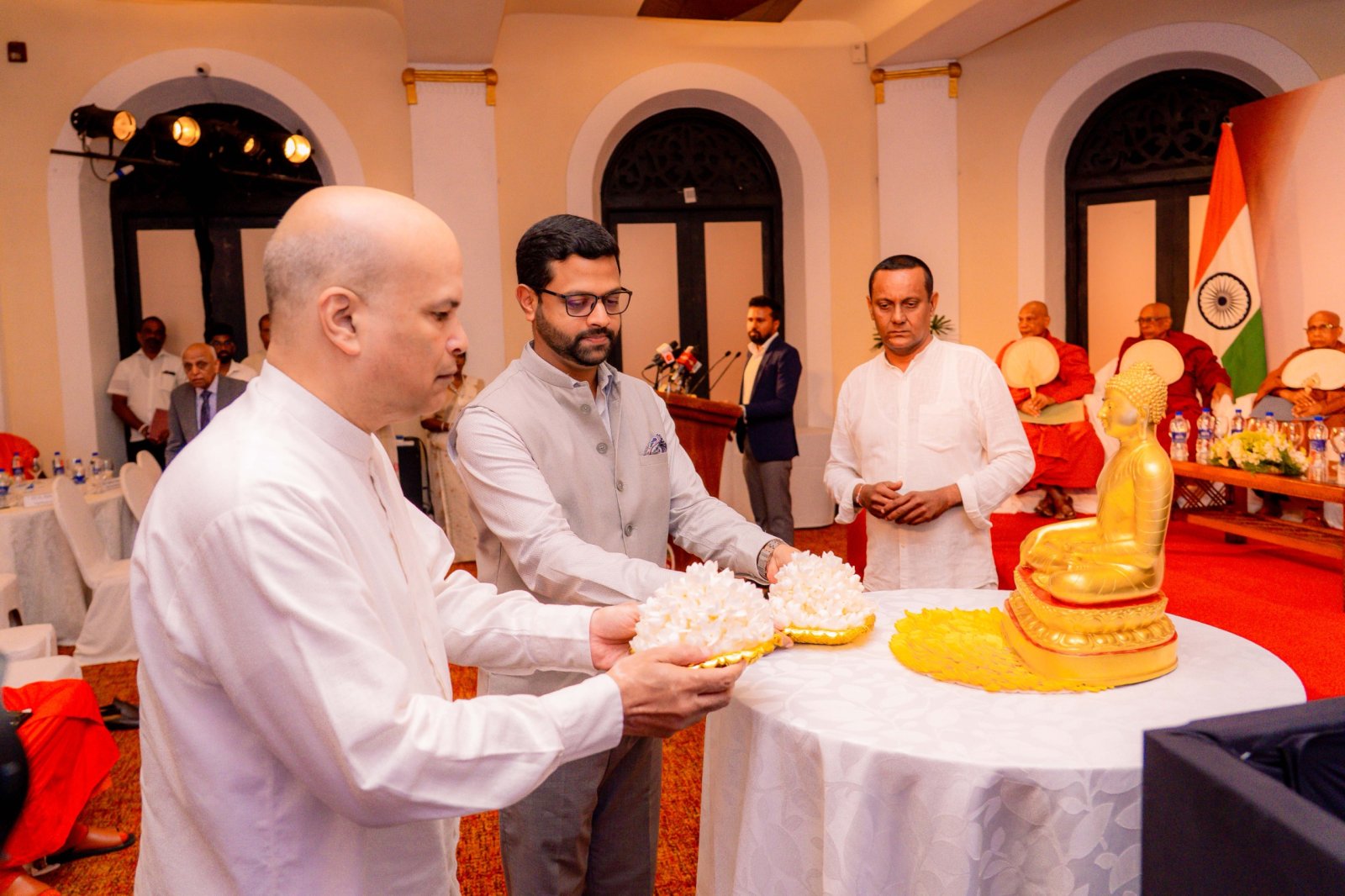
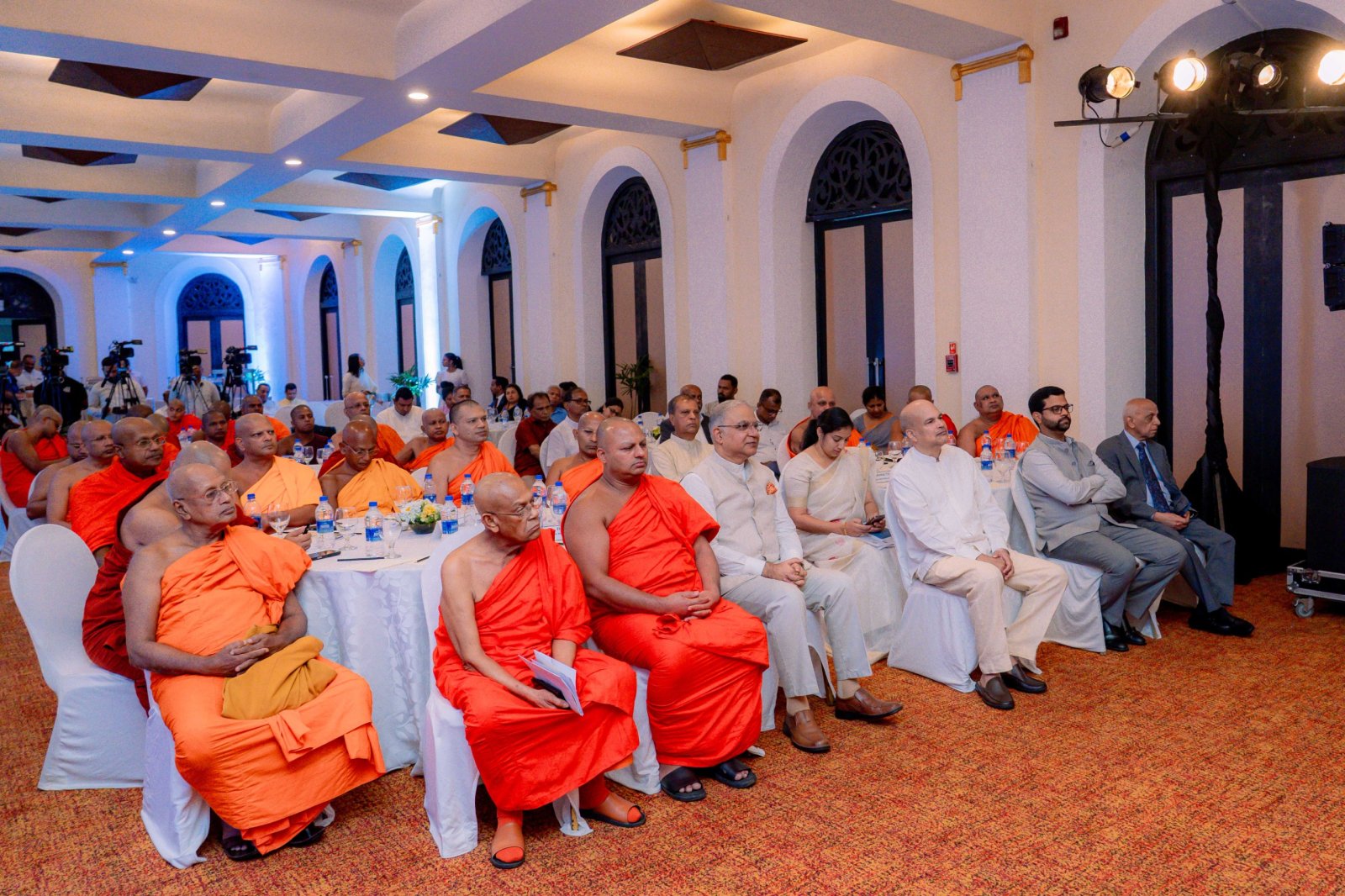
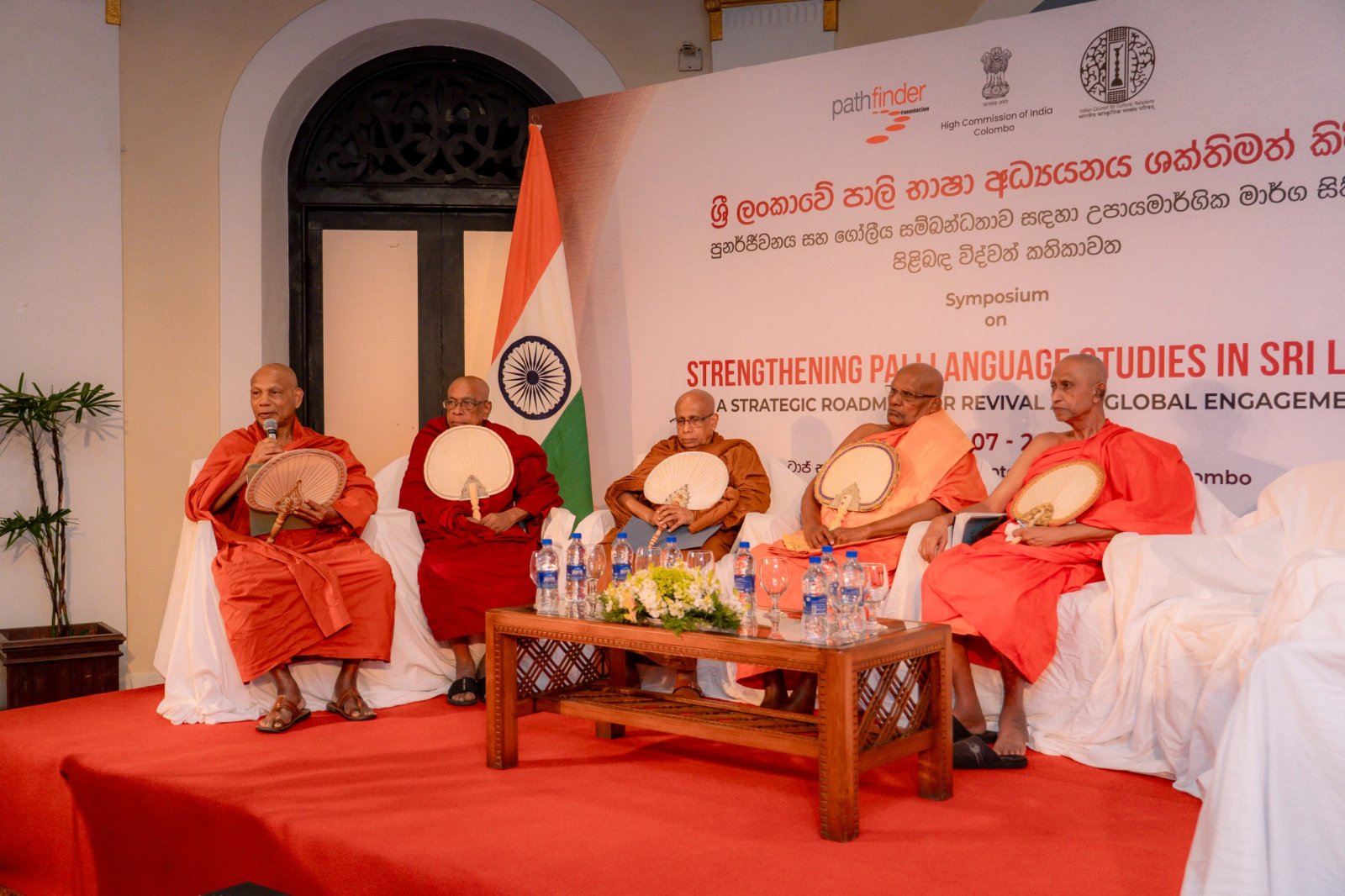
Symposium on Strengthening Pali Language Studies in Sri Lanka: A Strategic Roadmap for Revival and Global Engagement
Taj Samudra, Colombo – 24 July 2026
Most Venerable Maha Sangha,
- Anunayaka of the Malwathu Chapter of the Siyamopali Maha Nikaya Most Venerable Dr. Niyangoda Vijithasiri Anunayaka Thero
- Mahanayaka of the Sri Kalyani Samagri Dharma Maha Sangha Sabha of the Siyamopali Maha Nikaya Most Venerable Ittapane Dhammalankara Mahanayaka Thero
- Mahanayaka of the Amarapura Chulagandhi Chapter of the Sri Lanka Amarapura Maha Nikaya, Most Venerable Shastrapathi Ganthune Assaji Mahanayaka Thero
- Anunayaka of the Sri Lanka Ramanna Nikaya Most Venerable Waleboda Gunasiri Thero
- Mahanayaka of Sri Sambuddha Sasanodaya Sangha Sabha of the Amarapura Maha Nikaya, Most Venerable Dr. Waskaduwe Mahindawansa Mahanayake Thero
- Anunayaka and General Secretary of the Kotte Sri Kalyani Samagri Dharma Maha Sangha Sabha of the Siyamopali Maha Nikaya Most Venerable Senior Professor Agga Maha PandithaKotapitiye Rahula Anunayaka Thero
Founder of Pathfinder Foundation Ambassador Milinda Moragoda
Chairman of Pathfinder Foundation Amb. Bernard Gunathilake
Distinguished Scholars and Academics,
Esteemed Guests,
Ladies and Gentlemen,
Ayubowan, Namo Buddhaya
It is a great honour and privilege for me to be with all of you today.
Our gathering on strengthening Pali language studies, is not merely about the language. It is also about preserving one of humanity's greatest spiritual and intellectual traditions.
India and Sri Lanka share a relationship unlike any other. Prime Minister Narendra Modi has called our two countries 'Civilisational Twins.' There can indeed be no better description. Our ties are civilisational. They are spiritual. They are timeless.
A defining moment in this shared journey was the arrival of Arahant Mahinda Thera in Sri Lanka. He did not simply bring Buddhism to this island. He laid the foundation for a civilisational partnership that continues to guide our two countries even today.
Being amongst this august gathering today is humbling, not only at a professional level, but also a deeply personal one.
I was born and brought up in Bihar, in fact in the city of Patna, erstwhile Pataliputra. This is the sacred land where Prince Siddhartha attained enlightenment and became the Buddha. Growing up, the Buddha was never a distant historical figure. His presence was woven into the history, culture and spirit of the place I call home.
It is only natural thus that every engagement connected with Buddhism has a special meaning for me. For me, this is not merely a diplomatic engagement. It is a privilege to contribute, in however small a way, to preserving the language through which the Buddha's teachings have reached humanity. It feels to be a part of my destiny, my own personal dharma towards my home land.
India and Sri Lanka are united by Dhamma, it is a fraternal relationship unlike any other. For anybody to be able to create differences between our two countries, they would have to break this link of Dhamma - which is beyond the realm of possibility. We are inseparable and intertwined.
India has remained deeply committed to strengthening these bonds. In 2020, Prime Minister Modi announced a dedicated grant of USD 15 million to promote Buddhism between India and Sri Lanka. One of its largest initiatives is the provision of free solar electricity to nearly 10,000 Buddhist temples and pirivenas across Sri Lanka. A further USD 5 million remains available for future initiatives identified by the Government of Sri Lanka.
Separately, under Indian credit assistance, rooftop solar systems have been installed at around 5,000 temples and religious institutions across all twenty-five districts.
Our cooperation also extends to preserving sacred heritage. During Prime Minister Modi's visit in 2025, India announced assistance for the development of the Anuradhapura Sacred City Complex. The project envisions creating facilities at this revered city for millions of devotees and tourists. We seek to build the complex in a manner that is befitting its unparalleled significance.
Earlier this year, we also had the privilege of organising the first-ever international exposition of the Holy Devnimori Relics at the Ganagramaya Temple in Colombo. This Exposition was announced by the Prime Minister during his 2025 visit. Witnessing more than a million devotees pay homage to the Holy Relics, was another reminder of the ever-present radiance that Buddhism lends to our partnership. India had earlier organized the Exposition of Kapilavastu Relics in 2012; and Sarnath Relics in 2018, in Sri Lanka.
India has also sought to bring this shared heritage closer to younger generations through the Indian Gallery at the International Buddhist Museum in Kandy. On every Poya day for the last one year,
High Commission of India has been organizing mobile exhibitions on the life of the Buddha, and renditions of the life stories of Lord Buddha as manifested in Indian art. We have also been distributing Sinhala translations of the Jataka Tales in comic book format, to Dhamma schools to make the teachings of Dhamma more accessible to the younger audience.
India also facilitates numerous pilgrimages by Sri Lankan devotees to the Buddhist Circuit in India. In October 2022, the first international flight to Kushinagar International Airport in India in fact flew from Colombo.
Distinguished guests,
Preserving Buddhism also means preserving its knowledge. At the heart of that knowledge lays the Pali language.
In October 2024, Government of India conferred Pali with the status of a Classical Language. Prime Minister Shri Narendra Modi said that it is our responsibility to keep the Pali language alive to keep the words of Lord Buddha alive in their original spirit.
Pali is the language of the earliest Buddhist texts, such as the Tripitaka. These texts encompass the message of Dhamma. In a world ridden with conflict, Dhamma leads the path to peace for humanity. Dhamma means the unwavering assurance of welfare for all humanity! Preserving Pali will enable the dissemination of the message of Buddha in contrast to the destruction of Yuddha.
In fact here in Sri Lanka, Pali continues to be used in religious rituals, prayers, and ceremonies. It serves as the liturgical language in Theravada Buddhist practices. That was the reason that Sri Lanka was the first country to host a seminar on the importance of the recognition of Pali as a Classical Language soon after the decision of the Government of India in October 2024. Prime Minister himself noticed the initiation of discourse in Sri Lanka and thanked the scholars for joining the movement.
Since then, we have tried to build on that discourse. We supported the reprinting of important classical Pali grammar texts such as Namamala and Balawatharo.
Today's symposium is another important step in that journey. I would like to thank the Indian Council for Cultural Relations and the Pathfinder Foundation for partnering with us.
Our objective is not simply to preserve an ancient language, but the very culture and soul of the Buddhist society. It is this objective that has driven us to preserve and promote the Buddhist heritage globally.
We recently ensured the return of the Piprahwa relics of the Buddha to India. We have organised international expositions of Buddha’s relics across countries including Bhutan, Mongolia, Russia, Thailand, Vietnam. These expositions, as you would have seen in Sri Lanka, bring together people from across classes and regions. All are united in equal reverence. Lord Buddha belongs to everyone. Lord Buddha connects us all.
Distinguished guests,
The India-Sri Lanka relationship is testament of that connection. While our geography lends us proximity, our closeness derives from - shared history, shared faith, and shared aspirations.
We are working to enhance connectivity, deepen economic engagement, upgrade trade and investment ties, further cultural and educational cooperation, expand tourism and people-to-people contacts.
Sri Lanka is India's closest maritime neighbor and has been an integral part of India's Neighborhood First Policy and India's Vision MAHASAGAR. India has time and again demonstrated that it is a dependable partner and a reliable friend for Sri Lanka. Whether it is the most recent Ditwah related rescue and reconstruction efforts, the economic crisis, or the COVID pandemic, India has come to Sri Lanka’s assistance always as the first responder.
Our support has been timely, quick and unconditional. This also demonstrates that we are a responsible and friendly neighbor of Sri Lanka.
Today, India’s assistance to Sri Lanka stands at over USD 7.5 billion. This includes grant assistance of over USD 850 million. GoI has been carrying out people-oriented development projects across the 25 districts of Sri Lanka, cutting across almost all major sectors including infrastructure, housing, health, livelihood and rehabilitation, education, agriculture, renewable energy, railways, industrial development etc.
India is the closest neighbor for Sri Lanka, the largest trade and investment partner as well as the principal development partner of Sri Lanka.
From Dhamma to Development, India remains committed to sharing with Sri Lanka its best practices- for fostering partnerships for our shared future. We look forward to your blessings and support in this endeavour.
Bohoma Stuti.
Sabbe Satta Bhavantu Sukhitatta!